The Film
Gondhal
A suffocating young bride, Suman, uses her lover Sarjerao's obsession with the Gondhal ritual and turns a sacred tradition into a deadly chess match.
The story
Synopsis
Sacred Obsession
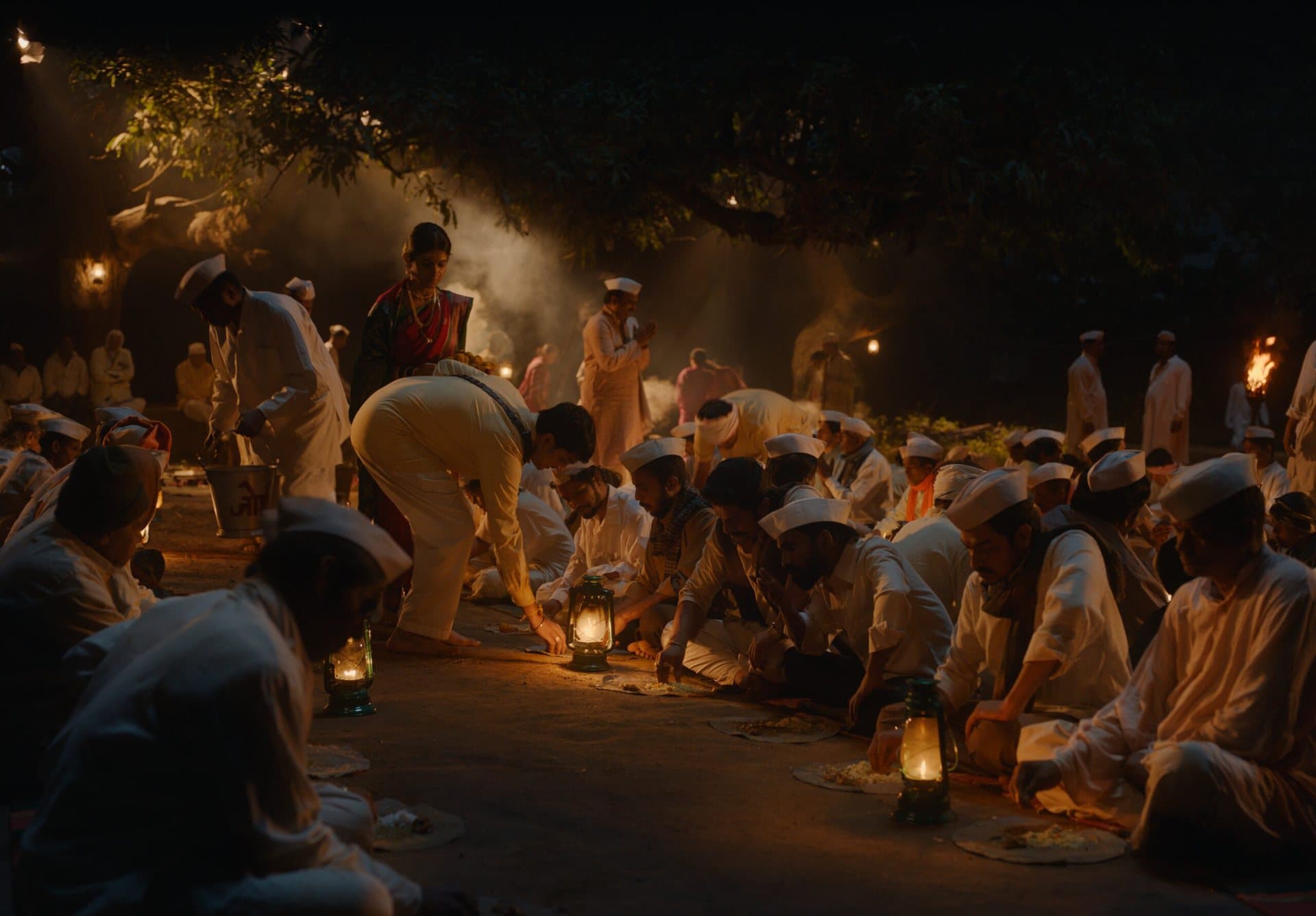
Set against the vibrant backdrop of rural Maharashtra, GONDHAL unfolds during a sacred folk ritual that has bound communities together for generations. Beneath the devotional music, ancient traditions, and collective celebration lies a story of forbidden desire. When a young married woman, Suman, finds herself trapped between societal expectations and her longing for freedom, she sets in motion a chain of events that will irrevocably alter the lives around her.
As passion intensifies, Suman manipulates the obsession of her lover Sarjerao in a desperate attempt to reclaim control over her destiny. What begins as a secret affair soon evolves into a dangerous struggle between love, honour, and personal agency. The sacred Gondhal ritual becomes both witness and catalyst, blurring the boundaries between devotion and desire, tradition and rebellion.
Rich in cultural authenticity yet driven by universally resonant emotions, GONDHAL is a tragic tale of love, betrayal, and fate. Through immersive storytelling, striking visuals, and the powerful symbolism of a living Indian tradition, the film explores how deeply human desires can collide with the rigid structures of society. As the night descends into chaos, a haunting tragedy unfolds — one that lingers long after the final ritual song fades away.
Director's note
From the director
I believe that audiences anywhere in the world can understand an honest story connected to its culture.
Just because we tell a story in Marathi, why should we limit ourselves to the boundaries of Marathi cinema? I wanted to break that mindset.
This honour does not belong only to me. It belongs to every actor, technician and every person who worked behind the scenes on Gondhal. Gondhal began as our film, but today it has become India's journey.
Credits
Film details
- Original title
- गोंधळGondhal
- Language
- Marathi
- Subtitles
- English
- Runtime
- 2h 00m
- Country
- India
- Year
- 2025
- Genre
- Thriller, Drama
- Release
- · Released
- Written & directed by
- Santosh Davakhar
- Produced by
- Santosh Davakhar, Diksha Davakhar
- Production company
- Davakhar Films
- Distribution
- AA Films
- Music
- Ilaiyaraaja
- Cinematography
- Amalendu Chaudhary
- Editing
- Ashish Mhatre
- Production design
- Sandeep Meher
- Sound design
- Jayesh Dhakan
Cultural context
The Gondhal ritual
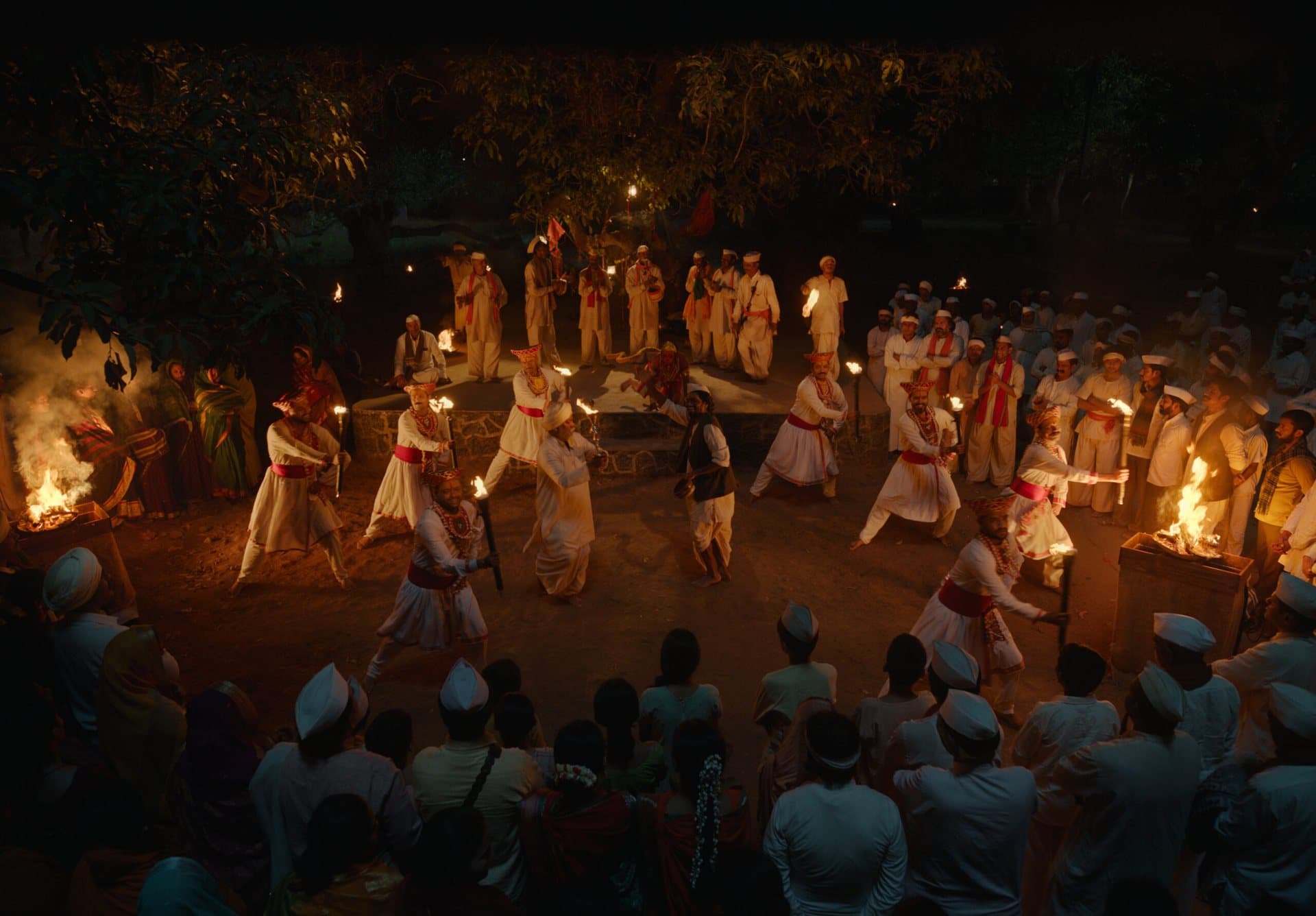
Gondhal is one of Maharashtra's oldest living folk traditions: a devotional performance staged through the night in honour of the goddess, most often Bhavani or Renuka. References to the form appear in thirteenth-century Mahanubhava literature, and for many families in Maharashtra hosting a Gondhal after a wedding remains a binding custom passed down through generations.
The performers, known as Gondhalis, sing mythological narratives to the beat of the sambal drum, tal cymbals and chipli clappers, dressed in vivid colour and often passing lit torches between them. The film takes this ritual as its setting, its rhythm and its pulse, letting the ceremony carry the story from dusk to dawn.
Behind the scenes
Production notes
Gondhal opens with a continuous night-time sequence of roughly twenty-five minutes, reported as the first single take of its length in an Indian feature. Director Santosh Davakhar has cited Birdman and 1917 as technical touchstones.
The score and songs are by Ilaiyaraaja, marking the composer's second Marathi soundtrack and his first in fourteen years. The soundtrack includes "Chandana" (lyrics and vocals by Ajay Gogavale, with Arya Ambekar), "Malhari" (lyrics by Santosh Davakhar, sung by Abhijeet Kosambi) and "Naman" (Harilal Ghuge).
The film was shot in rural Maharashtra with cinematography by Amalendu Chaudhary. A teaser was attached to screenings of Kantara: Chapter 1 in October 2025, ahead of the theatrical release on 14 November 2025.
Continue
Gondhalगोंधळ